
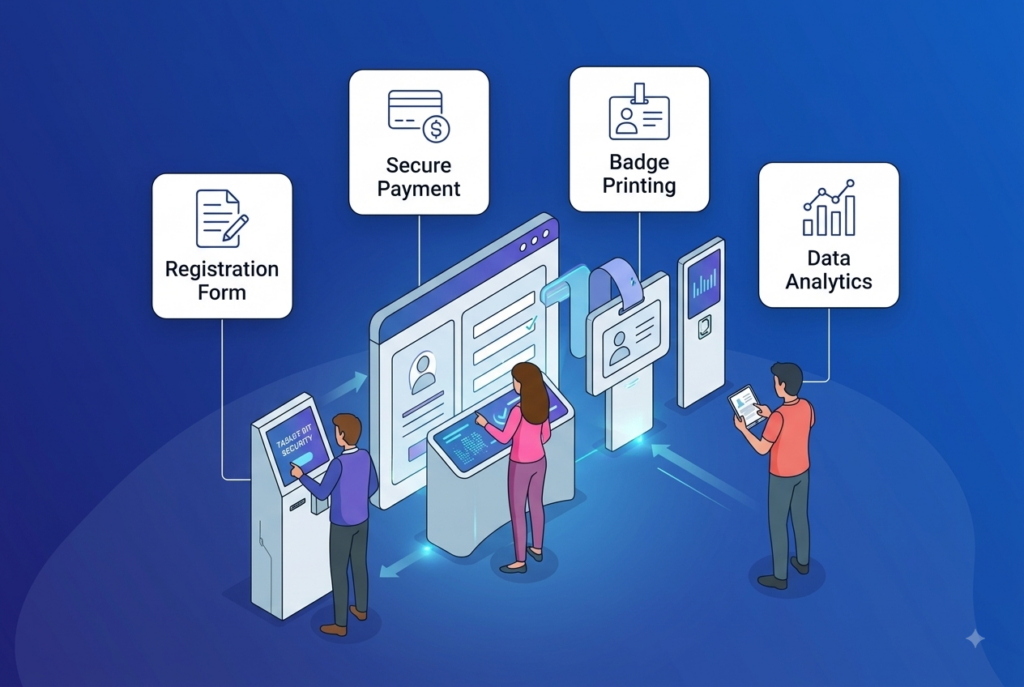
Running a corporate conference means juggling attendee registration, badge printing, session tracking, and check-in, often across multiple days and hundreds or thousands of attendees. A corporate conference registration system is what keeps all of this organized, but not every platform is built to handle enterprise-scale events well.
What Is a Corporate Conference Registration System?
A corporate conference registration system is software that manages the entire attendee journey for a conference, from initial sign-up through payment, badge generation, and on-site check-in. For larger conferences, it also needs to handle multi-track sessions, group registrations, and reporting on attendance in real time.
Unlike a simple event ticketing tool, a conference registration system needs to support more complex requirements: multiple ticket tiers, corporate group bookings, session selection, and detailed attendee data that event teams can act on after the event ends. A three-day conference with parallel breakout tracks and a mix of general admission, VIP, and speaker passes looks very different on the back end than a single-day ticketed event, and the registration system needs to be built for that complexity from the start.
Core Features to Look for in a Registration System
Before choosing a platform, corporate event teams should evaluate a few key areas:
- Custom branding, so the registration experience matches the company’s identity, not a third-party platform’s. This includes the sign-up page, confirmation emails, and any digital badges attendees receive.
- Group and bulk registration, since corporate attendees are often registered in batches by a company, not individually. A platform that only supports one-at-a-time sign-ups creates unnecessary manual work for large accounts.
- Session and track management, for conferences with breakout sessions running in parallel, so attendees can select which sessions they plan to attend and organizers can plan room capacity accordingly.
- Fast on-site check-in, using QR-based entry to avoid long lines at badge pickup, especially during the first hour when most attendees arrive at once.
- Real-time attendance reporting, so organizers can see turnout and session popularity as the event happens, not days later after manually compiling data.
- Data ownership, so attendee information stays with the organizing company rather than a third-party vendor, which matters for any follow-up marketing or lead tracking after the event.
Why White-Label Registration Matters for Corporate Events
Corporate conferences are brand events as much as they are logistical ones. When registration happens on a generic third-party page, the company’s brand disappears at exactly the moment attendees are forming their first impression of the event. A white-label registration system keeps the entire experience, from sign-up to badge to check-in, under the company’s own name and domain.
This also matters for data. Corporate teams often need attendee data for follow-up marketing, lead tracking, or post-event reporting to leadership. A white-label system with true data ownership makes that reporting straightforward, instead of relying on exports from a platform that technically owns the data and may limit what can be pulled out or how it can be used afterward.
Managing Multi-Day and Multi-Track Conferences
Larger conferences bring extra complexity: multiple days, parallel sessions, and attendees who need different access levels depending on their ticket type. A strong registration system should let organizers set up tiered access, such as general admission versus VIP or speaker passes, track which sessions attendees are registered for, and check attendees in separately for each day or session without manual tracking.
For example, a conference running three parallel tracks across two days needs a system that can show, in real time, which sessions are filling up and which still have room, so organizers can redirect attendees or open additional capacity before a room becomes overcrowded. Trying to manage that with spreadsheets or a basic ticketing tool quickly becomes unworkable once attendee numbers climb into the hundreds.
Frequently Asked Questions
What is the difference between event ticketing software and a conference registration system?
Ticketing software typically handles ticket sales and entry for a single event. A conference registration system is built for more complex needs, including multi-track sessions, group bookings, and detailed post-event reporting.
Do small companies need a full registration system, or just a signup form?
Even smaller internal conferences benefit from a proper registration system once there are multiple sessions, ticket tiers, or the need for check-in tracking, since a basic form cannot handle that complexity cleanly.
Can a registration system integrate with digital badges or wallet passes?
Yes, and this is increasingly standard. Wallet-based passes reduce the risk of lost printed badges and speed up check-in significantly compared to paper-based systems.
Choosing the Right System for Your Conference
The right registration system depends on the scale of the event, but the fundamentals stay the same: full brand control, real data ownership, fast and reliable check-in, and reporting that gives the event team something useful after the conference ends. Platforms that combine registration with wallet-based digital passes add an extra layer of convenience for attendees who no longer need to worry about a printed badge, and give organizers one less physical logistics problem to manage on event day.
Ready to run your next conference under your own brand? Start planning your event today.